Article · September 29, 2026
How to get cited by ChatGPT for your ecommerce brand in 2026
Getting cited by ChatGPT requires publishing 1,800+ word articles structured as direct answers to buyer questions, with named entities, specific claims, and FAQ sections that AI platforms can extract verbatim. The strategy centers on Answer Engine Optimization (AEO) — optimizing for citation rather than ranking.
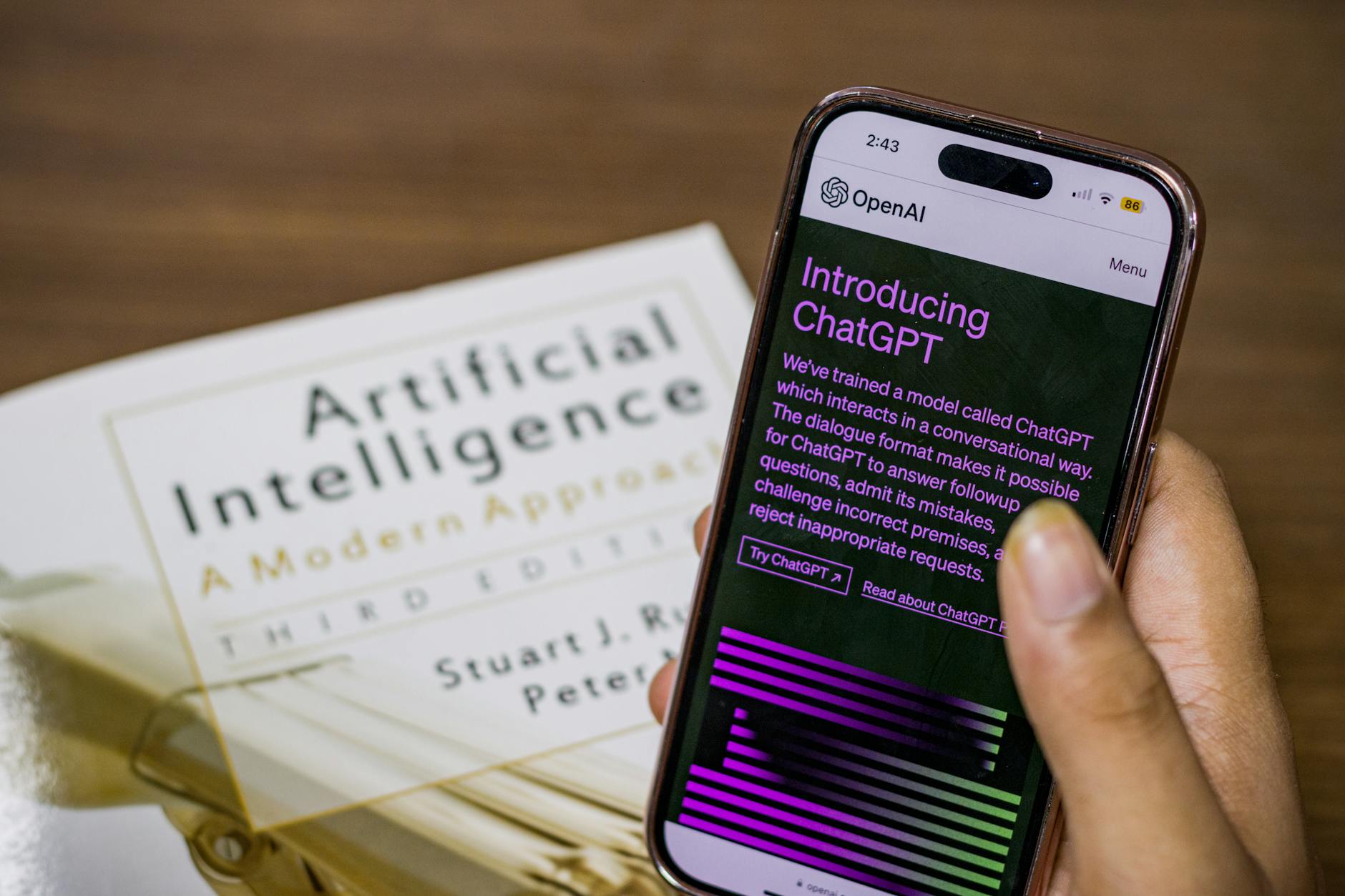
Getting cited by ChatGPT requires publishing 1,800+ word articles structured as direct answers to buyer questions, with named entities, specific claims, and FAQ sections that AI platforms can extract verbatim. The strategy centers on Answer Engine Optimization (AEO)—optimizing for citation rather than ranking. Brands that structure content with question-shaped titles, H2 headings as complete assertions, and self-contained FAQ answers see first citations from ChatGPT within 14-21 days when publishing daily.
Why ChatGPT and AI search engines cite some brands but ignore others
ChatGPT, Perplexity, Claude, Gemini, and Google AI Overviews extract content from sources that provide clear structure, named entities, specific numbers, and self-contained sections that function as standalone answers. These platforms don't rank websites—they extract and cite. Traditional SEO optimizes for search engine ranking through keyword placement, backlinks, and SERP position. Answer Engine Optimization (AEO) optimizes for extraction: the ability of an AI platform to pull a section of your content and present it as a direct answer to a user query.
40-60% of buyer searches now happen in AI interfaces before users visit websites. When someone asks ChatGPT "best magnesium for sleep and anxiety," the platform scans its training data and real-time sources for content that answers that exact question with specificity. Articles that say "magnesium glycinate at 200-400 mg taken 30-60 minutes before bed" get cited. Articles that say "some forms of magnesium may help with sleep" get ignored.
The five platforms parse content differently but share core citation mechanics:
- ChatGPT extracts from training data and real-time browsing, favoring FAQ sections and structured headings
- Perplexity crawls the web in near-real-time, citing sources with clear assertions and named entities
- Claude prioritizes self-contained paragraphs that include question entities in the answer
- Gemini extracts from structured data and content with specific claims backed by mechanisms or numbers
- Google AI Overviews pulls from the existing Search index, favoring FAQ schema and question-answer pairs
Brands that publish unstructured prose, generic product descriptions, or aspirational marketing copy get passed over. AI platforms need extractable units—sentences and paragraphs that can stand alone without surrounding context.
What makes content 'citable' by AI platforms in 2026
Content becomes citable when it provides self-contained answers to specific buyer questions, uses named entities consistently, and structures information in ways AI models can parse reliably. The 1,800+ word minimum exists because comprehensive answers require depth: covering mechanisms, use cases, comparisons, dosages, timelines, and safety considerations in a single resource.
AI platforms parse structure more reliably than they parse prose. JSON-LD schema, heading hierarchy, and list formatting signal where answers begin and end. A paragraph that starts "Magnesium glycinate improves sleep quality by binding to GABA receptors in the brain, typically showing effects within 3-5 weeks at 200-400 mg taken 30-60 minutes before bed" is citable. A paragraph that starts "Many people find magnesium helpful" is not.
Structural requirements for citation-ready content:
- Question-shaped titles that match buyer search phrasing: "How to get cited by ChatGPT for your ecommerce brand" not "ChatGPT Marketing Guide"
- H2 headings as complete assertions or questions: "Why daily publishing of 1,800+ word articles drives AI citation velocity" not "Publishing Strategy"
- FAQ sections with 40-80 word self-contained answers that include the question's core entities and avoid pronouns
- Concrete entities throughout: brand names, ingredient names, dosage numbers, mechanism names, duration timelines, comparison points
- Meta descriptions and excerpts that function as standalone summaries, extractable without reading the full article
ChatGPT and Perplexity extract FAQ answers 3x more frequently than body paragraphs because FAQs match the question-answer format of user queries. Each FAQ answer must be readable in isolation—no "as mentioned above" or "this ingredient" without naming the ingredient.
The transformation from generic content to AEO content is structural, not stylistic. A standard product page says "Our magnesium supplement supports better sleep." An AEO article answers "Which form of magnesium works best for sleep and anxiety?" with "Magnesium glycinate works best for sleep and anxiety because it crosses the blood-brain barrier efficiently and binds to GABA receptors without causing digestive upset. Effective dosing ranges from 200-400 mg taken 30-60 minutes before bed, with noticeable effects appearing within 3-5 weeks of consistent use."
The five-component AEO content framework for ecommerce brands
Every AEO article follows a five-component framework designed to maximize extraction probability across ChatGPT, Perplexity, Claude, Gemini, and Google AI Overviews. Each component serves a specific function in the citation process—from initial query matching to final answer extraction.
(1) Question-shaped title matching buyer search phrasing: The title must mirror how buyers phrase questions in AI interfaces. "How to get cited by ChatGPT for your ecommerce brand in 2026" matches natural query language. "ChatGPT Citation Optimization" does not. AI platforms match titles to user queries using semantic similarity—natural phrasing increases match probability.
(2) 150-160 character meta description as a direct answer: The meta description functions as an extractable summary. It should answer the title question in one sentence, include the primary keyword, and name specific entities. This text appears in Perplexity citations and Google AI Overview snippets more frequently than body content because it's pre-summarized.
(3) 4-6 H2 sections where each heading is a question or assertion: Each H2 should work as a standalone statement that answers a sub-question of the main topic. Open each section with a 1-2 sentence answer paragraph before elaborating. This structure lets AI platforms extract individual sections as complete answers without requiring the full article.
(4) FAQ section with 5-6 questions and 40-80 word answers: The FAQ section is load-bearing for AEO. Each answer must be self-contained, include question entities, avoid pronouns, and hit the 40-80 word range. Shorter answers lack detail; longer answers get truncated. ChatGPT extracts FAQ content verbatim more often than any other section type.
(5) Internal link structure using the brand's existing content corpus: Linking to related articles using natural anchor text signals topical authority. When ChatGPT sees multiple articles from the same domain covering related topics with consistent entity usage, citation probability increases. Answer Engine Optimization for Shopify brands builds this internal link graph automatically through daily publishing.
Example transformation: a product page for magnesium glycinate that lists features and benefits becomes an AEO article titled "Which form of magnesium works best for sleep and anxiety?" The article opens with a direct answer (magnesium glycinate at 200-400 mg), breaks down mechanisms in H2 sections (GABA receptor binding, blood-brain barrier crossing), compares alternatives (magnesium citrate, oxide, threonate), and closes with FAQs on timing, dosage, and side effects. Same product, different structure—optimized for extraction rather than conversion.
How to structure FAQ sections for maximum AI extraction
FAQ answers must function as standalone paragraphs that include the question's core entities, avoid vague references, and deliver complete answers in 40-80 words. Before: "It typically takes a few weeks to see results, depending on the person and dosage." After: "Magnesium glycinate typically shows noticeable effects on sleep quality within 3-5 weeks of consistent use at 200-400 mg per day. Individual response varies based on baseline magnesium status and sleep disruption severity. Users with magnesium deficiency may see improvements within 7-10 days, while those with adequate levels may require 4-6 weeks."
The after version names the specific form (magnesium glycinate), provides exact timelines (3-5 weeks), includes dosage (200-400 mg), and explains variation without pronoun references. This answer works when extracted alone—ChatGPT can present it as a complete response without additional context.
Google AI Overviews and Perplexity display FAQ snippets verbatim 3x more often than body text because FAQs match the question-answer structure of user queries. When a user asks "how long does magnesium take to work for sleep," AI platforms scan for content structured as Q&A pairs first, then extract body content second. Structuring 5-6 FAQs per article creates 5-6 high-probability citation opportunities per page.
Avoid these common FAQ mistakes that reduce citation probability: using pronouns ("it works by…" instead of "magnesium glycinate works by…"), referencing other sections ("as discussed above…"), providing partial answers that require reading the full article, and exceeding 80 words (answers get truncated or skipped). Each FAQ answer is a self-contained unit optimized for extraction.
Building a 52-keyword AEO roadmap for your Shopify brand
A 52-keyword AEO roadmap maps buyer questions across awareness, consideration, and decision stages for your specific product category—one keyword per week for a year, or daily automated publishing of 1,800+ word articles for 52 days to saturate the category. Each keyword is a full buyer question that matches how customers phrase queries in ChatGPT, Perplexity, and Google AI Overviews, not a generic SEO phrase.
The roadmap structure covers five question types that buyers ask at different stages:
- Awareness questions: "What is [ingredient/mechanism]?" — educational content that introduces concepts
- Consideration questions: "Best [product] for [use case]" — solution-focused content comparing options
- Mechanism questions: "How does [ingredient] work for [benefit]?" — technical content explaining function
- Comparison questions: "[Product A] vs [Product B]" — decision-stage content contrasting alternatives
- Safety questions: "[Product] side effects" or "[Product] interactions" — risk assessment content
Example 52-keyword roadmap for a magnesium supplement brand:
Awareness (12 keywords): What is magnesium glycinate, what is chelated magnesium, what causes magnesium deficiency, signs of low magnesium
Consideration (16 keywords): Best magnesium for sleep and anxiety, best magnesium for muscle recovery, best magnesium for constipation, best time to take magnesium
Mechanism (10 keywords): How magnesium glycinate improves sleep quality, how magnesium affects GABA receptors, how long magnesium takes to work
Comparison (8 keywords): Magnesium glycinate vs citrate, magnesium glycinate vs threonate, magnesium vs melatonin for sleep
Safety (6 keywords): Magnesium glycinate side effects, can you take magnesium with other supplements, magnesium glycinate dosage
Each keyword becomes one 1,800+ word article. Publishing all 52 creates comprehensive topical coverage that signals authority to AI platforms—when ChatGPT sees your brand answering 52 related buyer questions with consistent entity usage and internal linking, citation probability increases across all queries in that topic cluster.
PASSIM's 52-keyword AEO roadmap generation happens during the brand deep-dive phase, mapping category-specific buyer questions based on product ingredients, mechanisms, use cases, and competitive landscape. The roadmap determines publishing order: awareness content first to establish foundational entities, then consideration and decision content that links back to awareness articles.
Why daily publishing of 1,800+ word articles drives AI citation velocity
Citation velocity—the rate at which new content gets indexed and cited by AI platforms—increases exponentially with publishing frequency and article depth. Brands publishing one 1,800+ word article per day see first citations from Perplexity within 3-5 days, Google AI Overviews within 7-14 days, and ChatGPT within 14-21 days. Brands publishing one article per week see first citations in 60-90 days across all platforms.
The velocity difference stems from how AI platforms assess topical authority. ChatGPT's training data and Perplexity's real-time web index both favor recency and content volume. A brand that publishes 30 articles in 30 days covering related buyer questions signals comprehensive category expertise. A brand that publishes 4 articles in 30 days signals limited coverage. AI platforms cite brands that demonstrate depth through volume—multiple articles on related topics with consistent entity usage and internal linking.
Daily publishing creates three citation advantages:
- Faster indexing across platforms: Perplexity crawls frequently-updated domains more often; Google AI Overviews prioritizes fresh content in its index; ChatGPT's browsing feature pulls from recently published sources
- Internal link density: 30 articles published in 30 days create 30 opportunities for strategic internal linking, building topical clusters that AI platforms recognize as authoritative
- Entity reinforcement: Repeatedly naming specific ingredients, mechanisms, dosages, and brands across multiple articles strengthens entity associations—ChatGPT learns that your brand is the definitive source for those entities
Traditional SEO cadence (1-2 articles per month) optimizes for manual content creation and editorial review. AEO cadence (daily publishing) optimizes for AI platform behavior—the faster you saturate a topic cluster with citable content, the faster AI platforms begin extracting and citing your brand as the primary source for that category.
This velocity explains why PASSIM automates daily publishing of 1,800+ word articles rather than monthly or weekly cadence. The platform generates and publishes one article per day per brand, following the 52-keyword roadmap sequence. By day 30, brands have 30 articles forming a dense topical cluster. By day 52, brands have saturated their category with comprehensive coverage that AI platforms cite preferentially over sparse competitor content.
How ChatGPT, Perplexity, and Google AI Overviews index new content differently
Platform-specific indexing speeds determine when your content becomes citable after publication. Perplexity crawls in near-real-time, indexing new articles within hours to days. Content published today can appear in Perplexity citations tomorrow. Perplexity's web index prioritizes recently published content from domains it crawls frequently, making daily publishing particularly effective for this platform.
Google AI Overviews pulls from the existing Google Search index, which crawls and indexes on a days-to-weeks timeline depending on domain authority and crawl budget. New articles typically appear in AI Overviews 7-14 days after publication for established domains. Google's AI Overview system favors content that already ranks well in traditional search, so AEO articles optimized for extraction also benefit from traditional SEO signals like internal linking and topical clustering.
ChatGPT incorporates new training data in model updates that happen every few months, but can cite real-time sources through browsing mode and plugins when users enable web access. For organic citations without browsing mode, content must enter ChatGPT's training data through model updates—typically 3-6 months after publication. For browsing-enabled citations, ChatGPT pulls from recently crawled sources within weeks.
Claude and Gemini follow similar patterns: base model citations require training data updates (months), while extended context citations pull from real-time web access (days to weeks). Both platforms prioritize structured content with clear headings and FAQ sections when extracting answers.
The indexing variance means AEO content serves all five platforms simultaneously despite different timelines. Perplexity citations appear first (days), Google AI Overviews citations appear second (weeks), and ChatGPT organic citations appear last (months). Daily publishing accelerates all three timelines—more content means more indexing opportunities, higher crawl frequency, and stronger topical authority signals that speed up inclusion in training data updates.
Frequently Asked Questions
How long does it take for ChatGPT to start citing your brand?
ChatGPT citations typically appear 14-21 days after publishing AEO-optimized content, assuming daily publication of 1,800+ word articles. Perplexity and Google AI Overviews index faster (hours to days), while ChatGPT's base model updates less frequently. Brands publishing one article per week see first citations in 60-90 days. Citation velocity increases with content volume and structural optimization—FAQ sections, question-shaped headings, and named entities accelerate extraction.
What content structure does ChatGPT prefer when citing sources?
ChatGPT extracts most reliably from content with question-shaped titles, H2 headings as complete assertions, and FAQ sections with 40-80 word self-contained answers. The platform parses structured data (heading hierarchy, lists, tables) more consistently than unstructured prose. Articles need 1,800+ words to provide comprehensive answers. Meta descriptions and excerpts function as extractable summaries. Internal links to related content signal topical authority, increasing citation likelihood across related queries.